


Meet The Pack: Where Dogs Find Fulfillment, Not Just Fitness
More than just a walk. Join our small, managed packs for high-intensity exercise, socialization, and true canine fulfillment. Serving Barrie, Midhurst, and Springwater.
The heart of what we do:
dog running.
Fulfilment + Fitness
Why dog running?
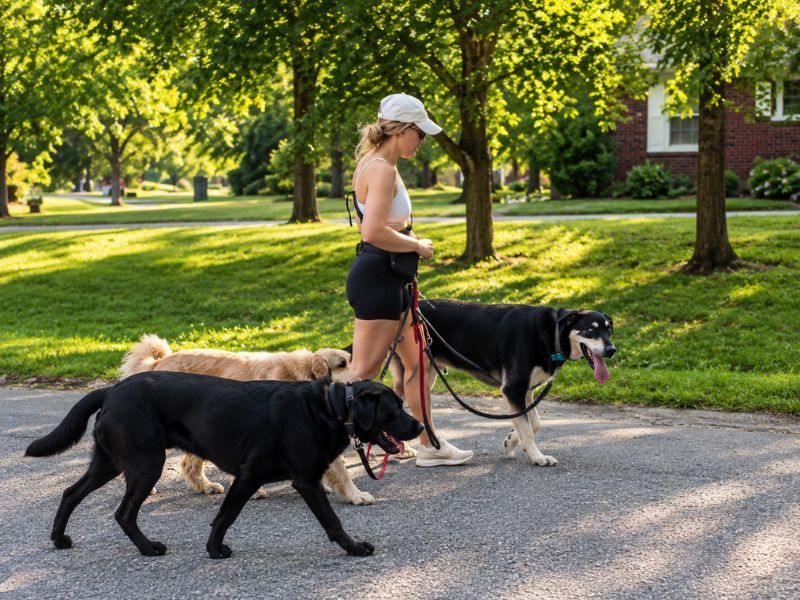
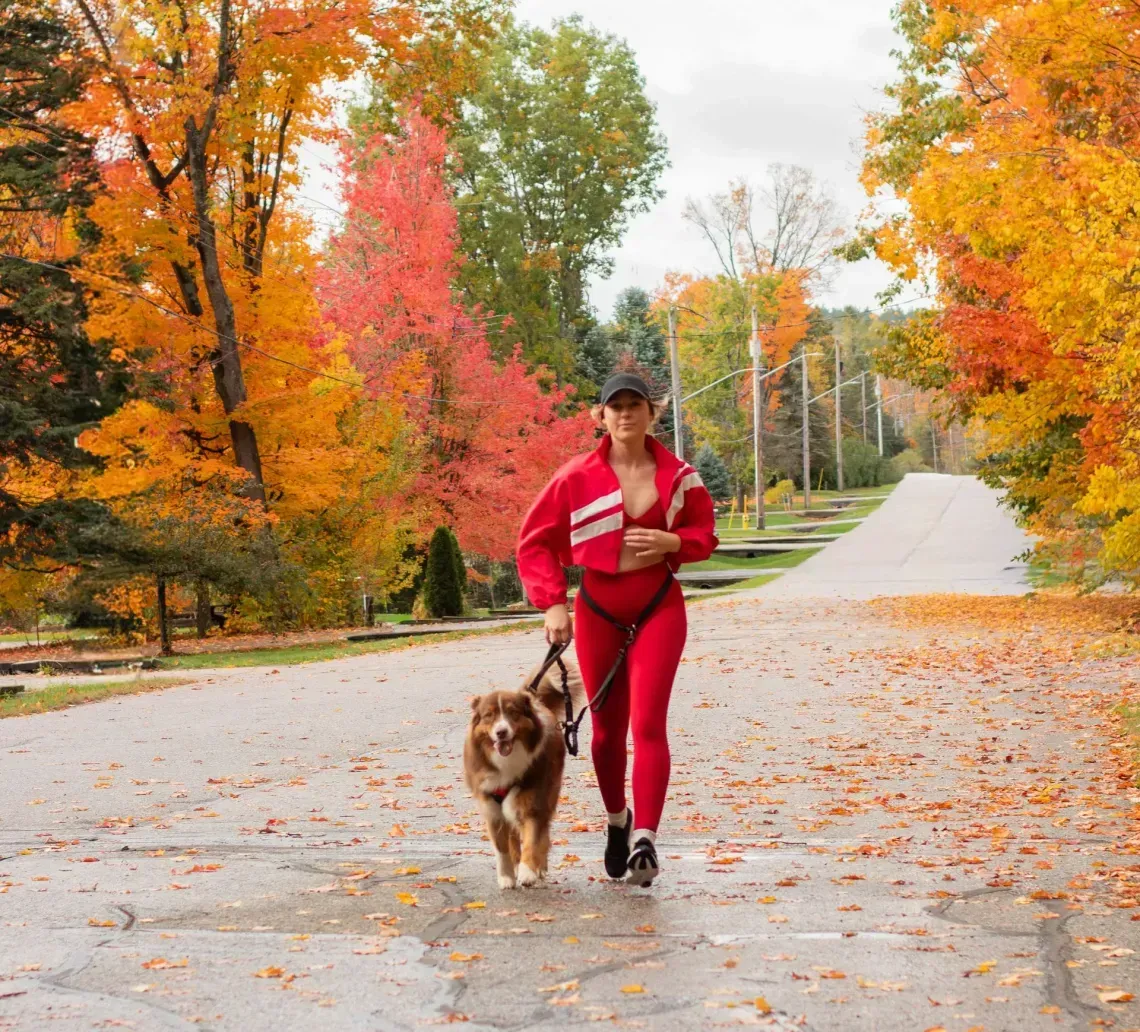
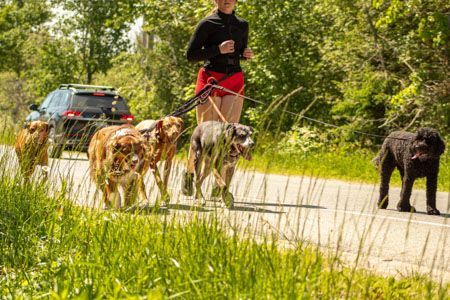
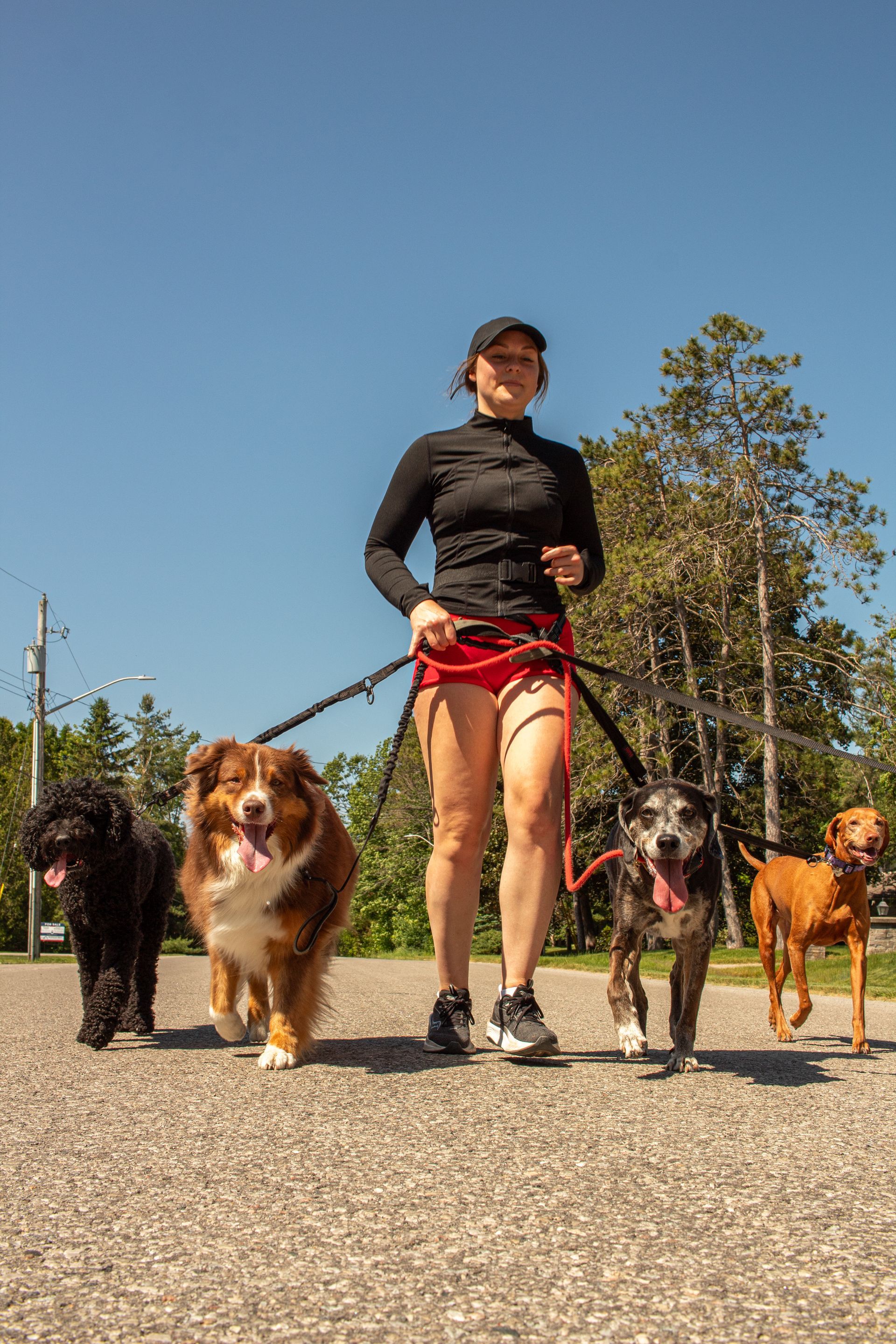
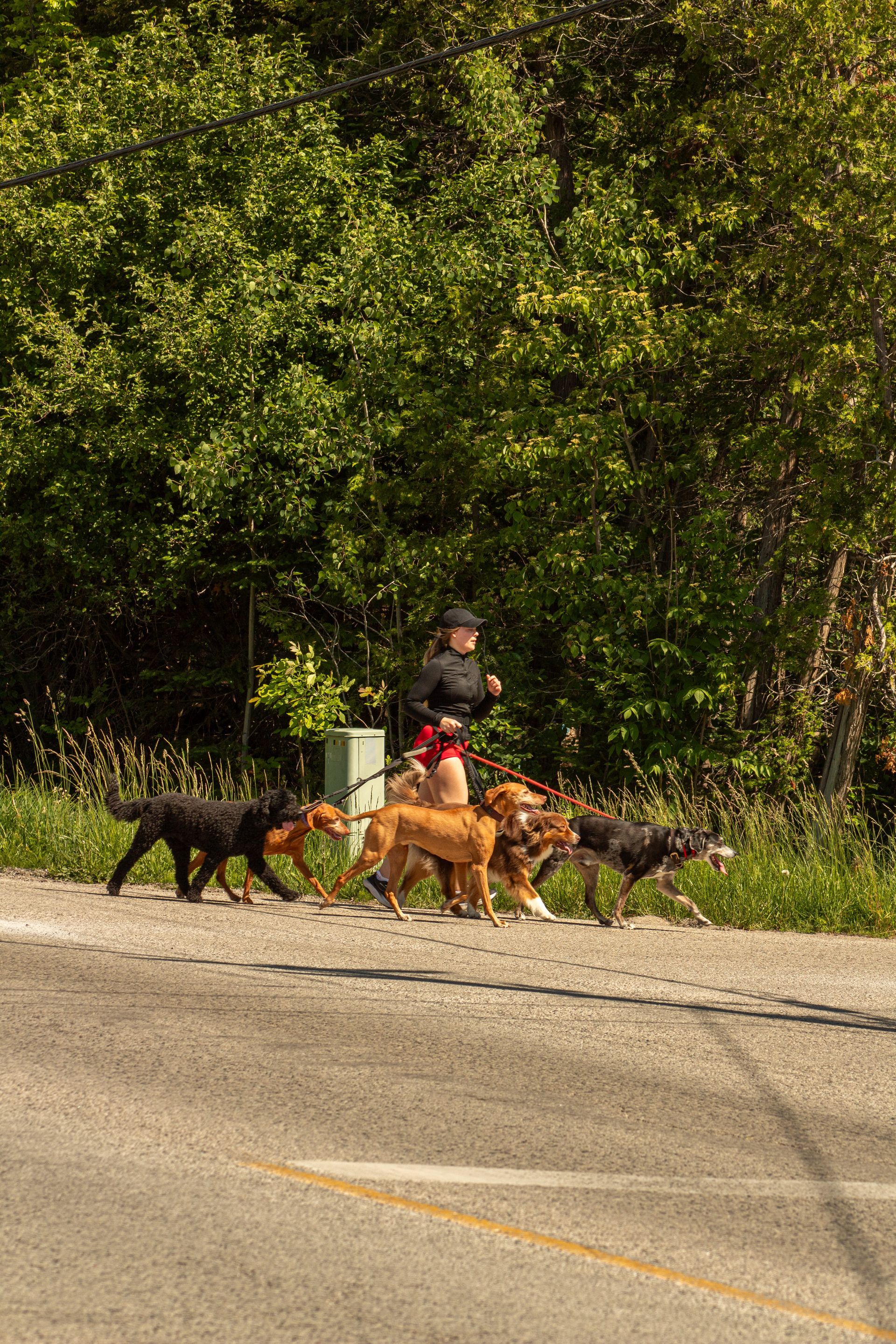
At Run The Dog, we offer short-distance of 5-6km pack runs through quiet neighbourhoods in the Barrie and Midhurst area. Similar to our structured walking packs, we add another level of physical intensity by incorporating 30 minutes of running into each session.
Our runs are structured with your dog’s safety and conditioning in mind:
- 15-minute warm-up walk
- 30-minute controlled run
- 15-minute cool-down walk
We choose quiet routes with predictable footing and keep our pace controlled so the dogs can move comfortably as a group.
Not every dog is built for the same type or amount of exercise. We assess each dog individually based on their breed, age, fitness level, body structure, temperament and exercise history before deciding whether running is the right fit.
Some breeds may be more prone to joint, respiratory or other physical limitations, which is why we may recommend one of our walking or hiking services instead.
Our goal isn’t simply to tire your dog out — it’s to provide safe, purposeful movement that supports both physical fitness and mental fulfilment.
Interested in joining the pack?
Fill out our intake form so we can learn more about your dog’s exercise needs, temperament and goals and help match them with the service that suits them best.
How dog running can be the perfect fit for your dog
Safety, Structure + Confidence Building
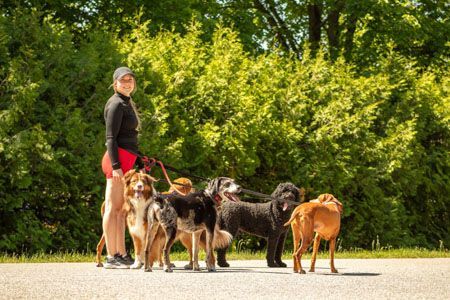
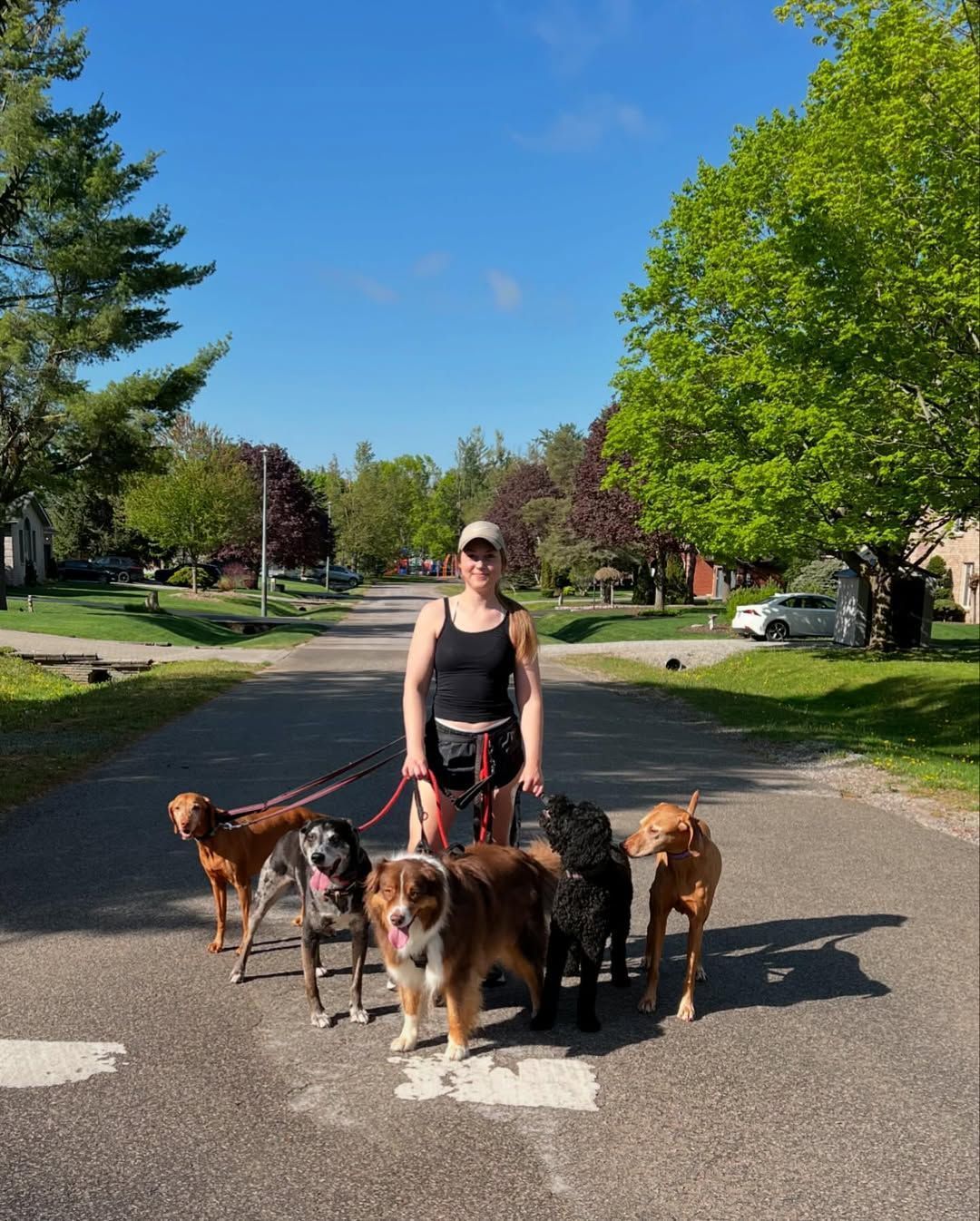
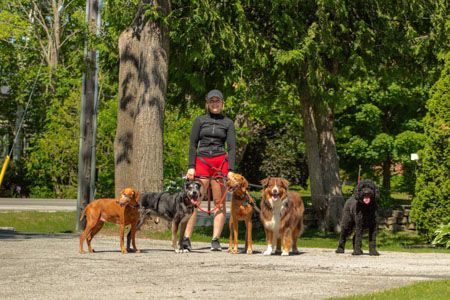
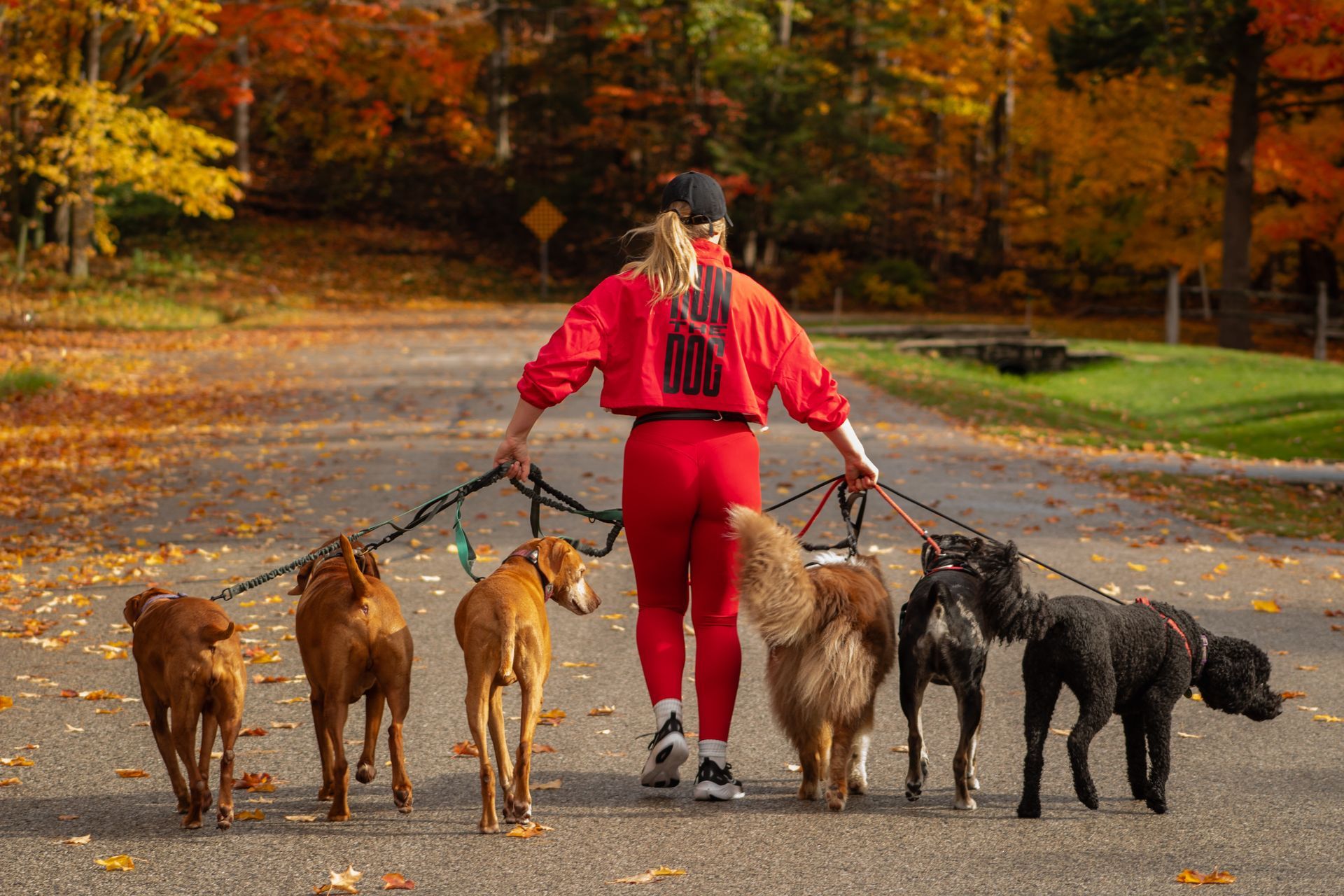
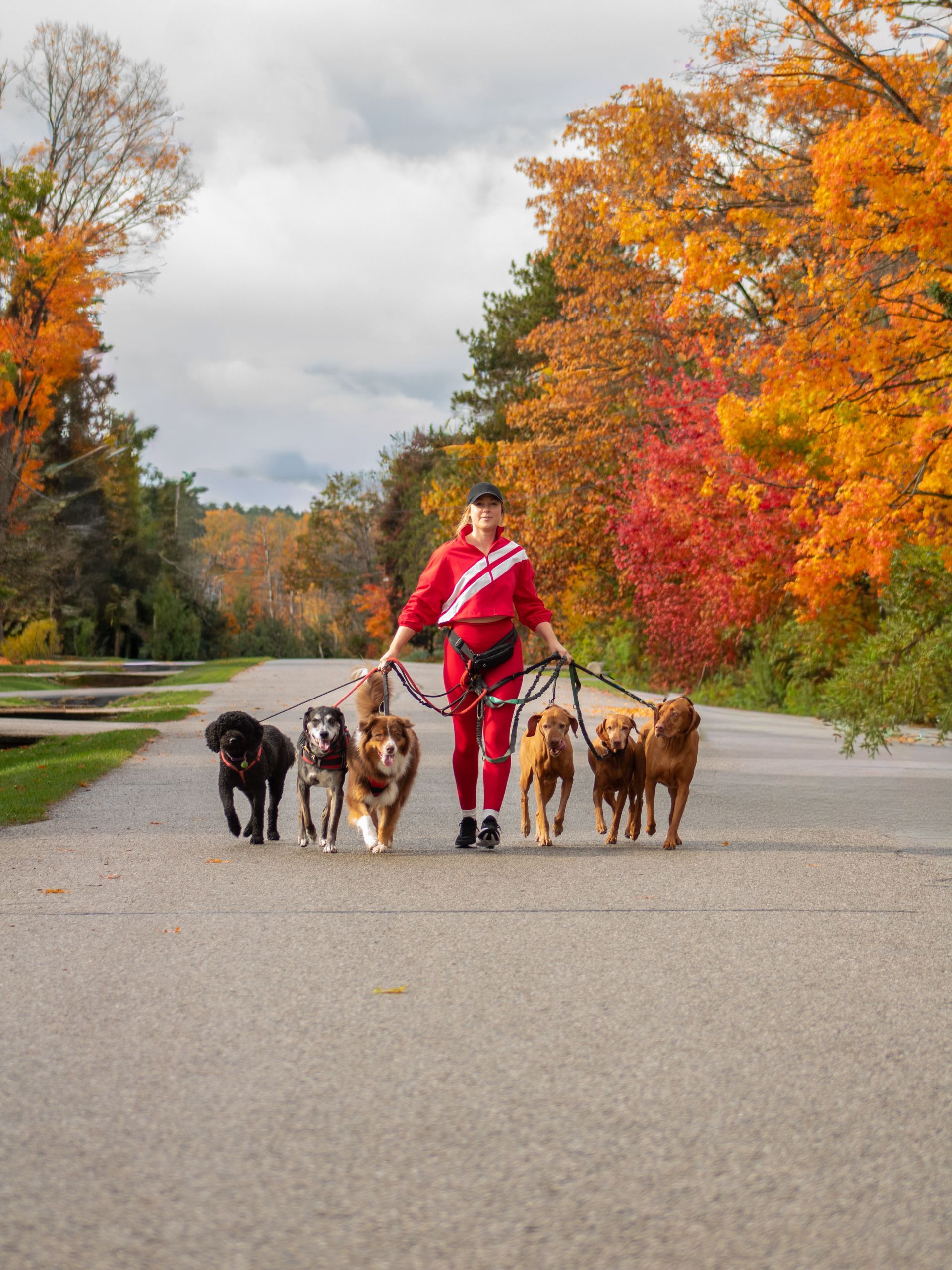
Running a pack of 4–5 dogs safely is no easy task. Structure is a huge part of what makes it possible.
Throughout our runs, we teach each dog to find their position within the pack and maintain it. We work on leash manners, discourage pulling and positively reinforce the right movement, and engagement.
Dogs also learn verbal cues for changing direction, slowing down and picking up the pace, while practicing neutrality when passing people, dogs and other distractions.
That means they aren’t just running — they’re thinking, listening and learning while they move.
Changing speeds works on impulse control, maintaining position builds focus, and moving confidently alongside other dogs helps create a calmer, more neutral pack environment.
Think of it as a full-body workout for both the body and brain.
After all, structure is what allows us to safely manage multiple dogs at once — and owner and dog runner Chantal understands the handling skills, routines and pack awareness that make our runs possible.
Safety & Policy Agreement
At Run The Dog, your dog’s safety, health, and well-being are always our top priority.
1. Pre- and Post-Exercise Safety
To help keep your dog comfortable and reduce the risk of digestive upset during exercise, please avoid feeding your dog within one hour before their scheduled service.
As an added safety precaution, particularly for deep-chested breeds, we recommend feeding your dog after their run, hike, or walk rather than beforehand. Please allow your dog time to fully cool down and settle before offering their meal to reduce the risk of BLOAT.
Following exercise, especially after higher-intensity activity or during warmer weather, dogs are given time to gradually cool down. Water is offered appropriately during the cool-down period to help prevent excessive drinking while dogs are still heavily panting or overheated.
2. Seasonal Weather
We run, hike, and walk in a variety of weather conditions — rain, snow, and sunshine!
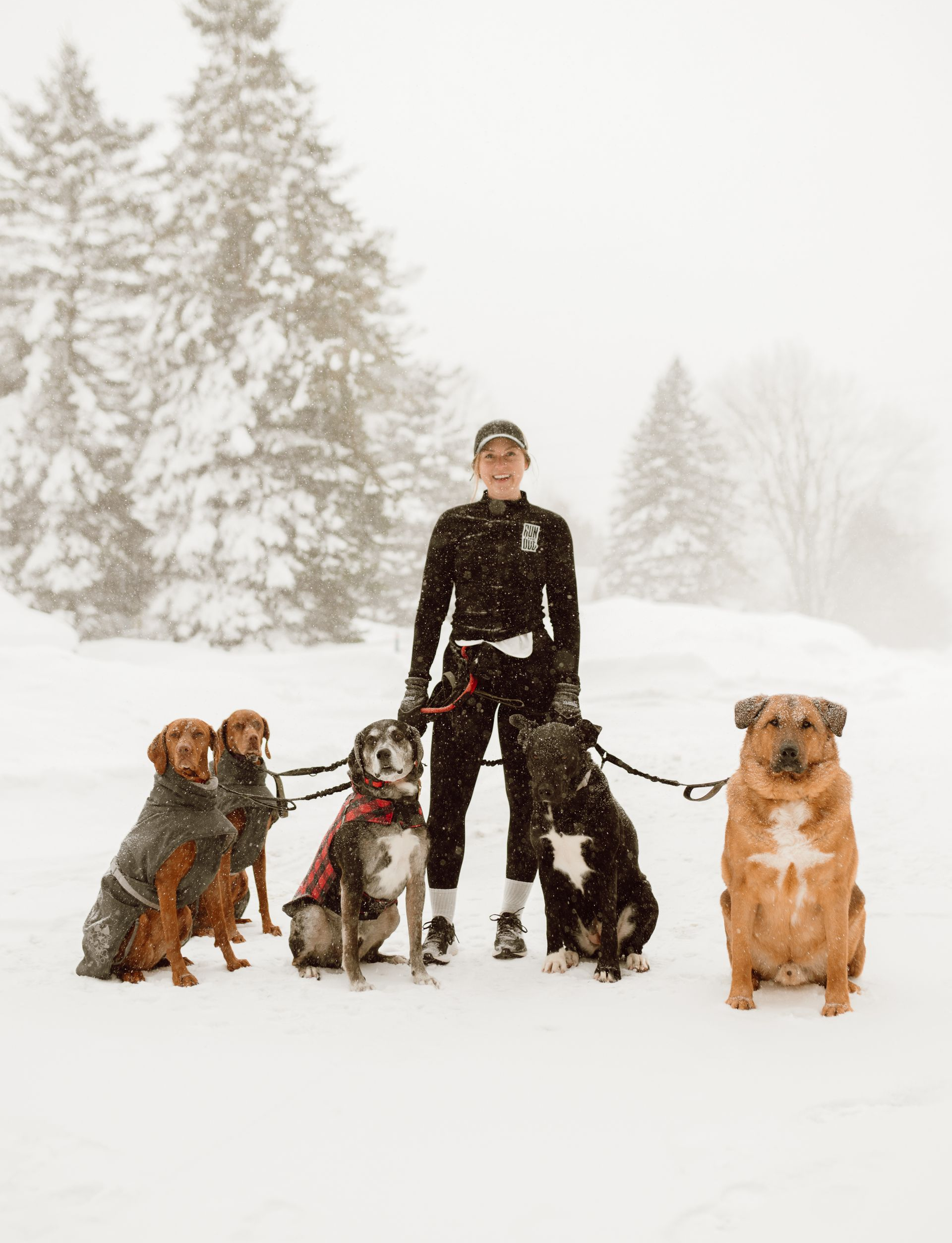
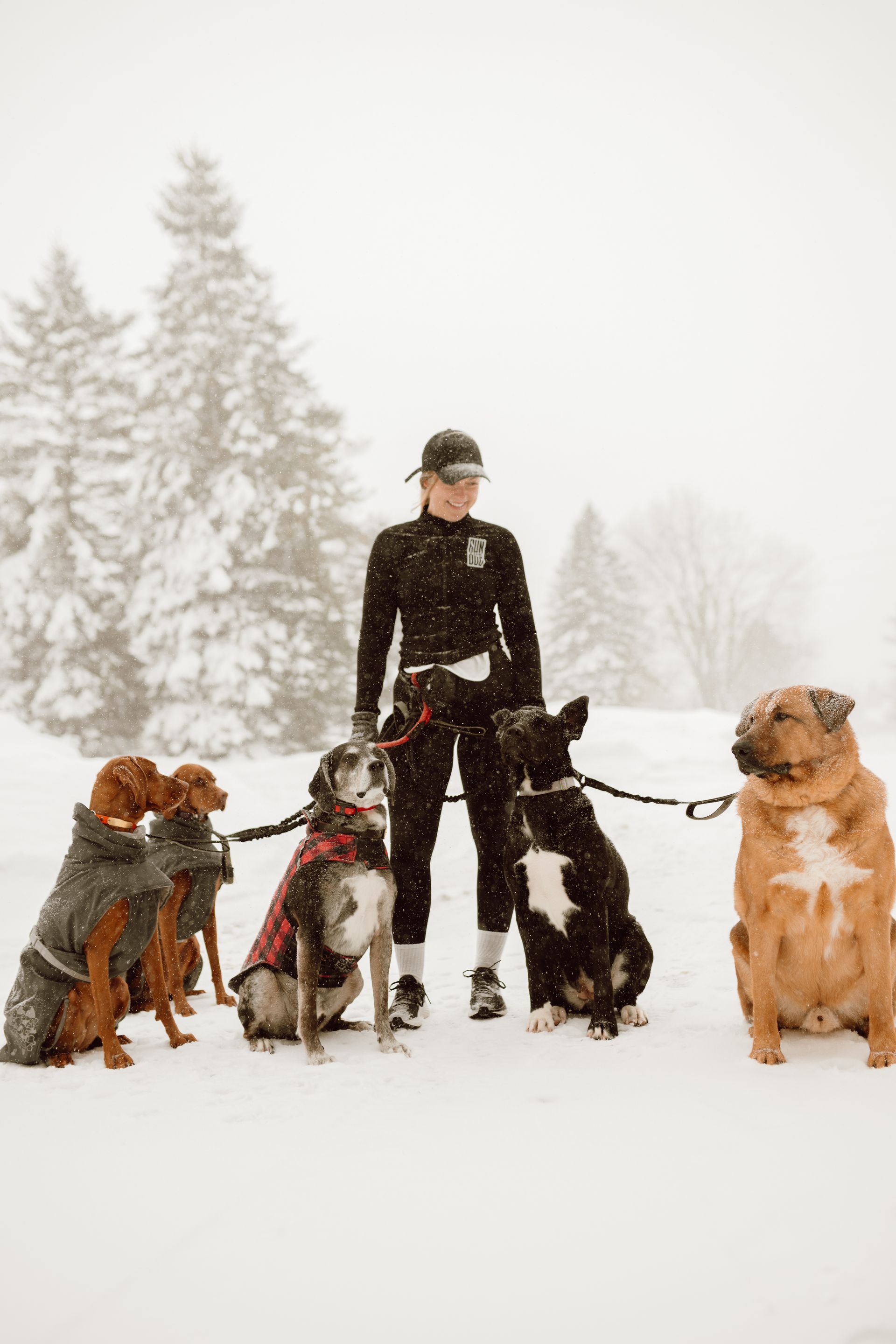
As the colder months approach, please make sure your dog is appropriately equipped for winter weather. Depending on your dog’s breed, coat type, age, and tolerance to colder temperatures, booties and/or a winter coat may be recommended.
Please also regularly check your dog’s paws and winter gear throughout the season to ensure everything remains comfortable and in good condition.
Why choose Dog running?
There are so many reasons to begin to continue running with your dog. It obviously provides them with a physical stimulation that most dogs just aren’t getting, but it also provides mental stimulation. Remember that dogs were originally asked to help get work done meaning they had a job or purpose, whether it was border collie helping on the farm heard sheep, or Dalmatians running out in front of the firetruck to alert the community what was coming behind.
Even beyond that, some were trained to protect your homes and businesses. Over time, dogs have become more family than workforce, although some provide valuable assistance to the blind, or part of the military and police forces. Like us dogs want to feel safe and secure, and when they don’t it can present in many ways.
We need to think about the evolution of purpose of dogs in our lives and how it has changed in the last forty years. Once dogs were only seen as working aids; they helped in protection and many other jobs. Shepherds and collies helped ranchers; Portuguese water dogs helped fisherman; Dalmatians were known to protect firemen, and German shepherds helped police in military.
Many things have contributed to our present relationship with dogs and their lifestyle. The attitudes toward dogs being seen as family members have risen dramatically, and shelter adoption rates echo this thought. A predominantly work-based relationship and dynamic gave way to domestication and companionship.
But the trend towards responsible dog ownership is trending up. In some instances, dogs are still asked to help with work but by and large, they are considered members of the family. What they were bred to do and how they live today are in conflict. They live, mostly sedentary lives with daily walks, occasional play and hearty meals. Long gone are the days of earning your keep and burning calories in the fields and farms. But enough what caused it, how do we fix it?
FAQS
Pack Running Sessions – Frequently Asked Questions
My dog is high energy but has never run long distance. Can they join?
Yes! We assess every dog individually. We recommend starting with our Short Distance (4-6km) runs and building stamina over time.
Is there an age requirement for running?
Safety is paramount. For our structured running services, dogs must be at least 15 months old (18 months for longer distances) to protect their developing joints.
My dog is nervous or reactive. Is this safe?
Absolutely. Many of our "crew" members started as nervous pups. The forward motion of the pack builds confidence, and we strictly manage interactions to ensure safety.
Do you run in all weather?
We run in most weather conditions to maintain routine! However, we will cancel or modify services in extreme heat, cold, or dangerous storms for the dogs' safety.
How do I get started?
All new dogs start with a mandatory Private Intro Run ($50 + HST). This allows us to assess your dog's fitness and temperament before introducing them to a pack.
REVIEWS